
Safety Through the Years interactive timeline
Organization: Canada Safety Council
Date of Publication: November 22, 2017
Link:
100th Anniversary Timeline
Description:
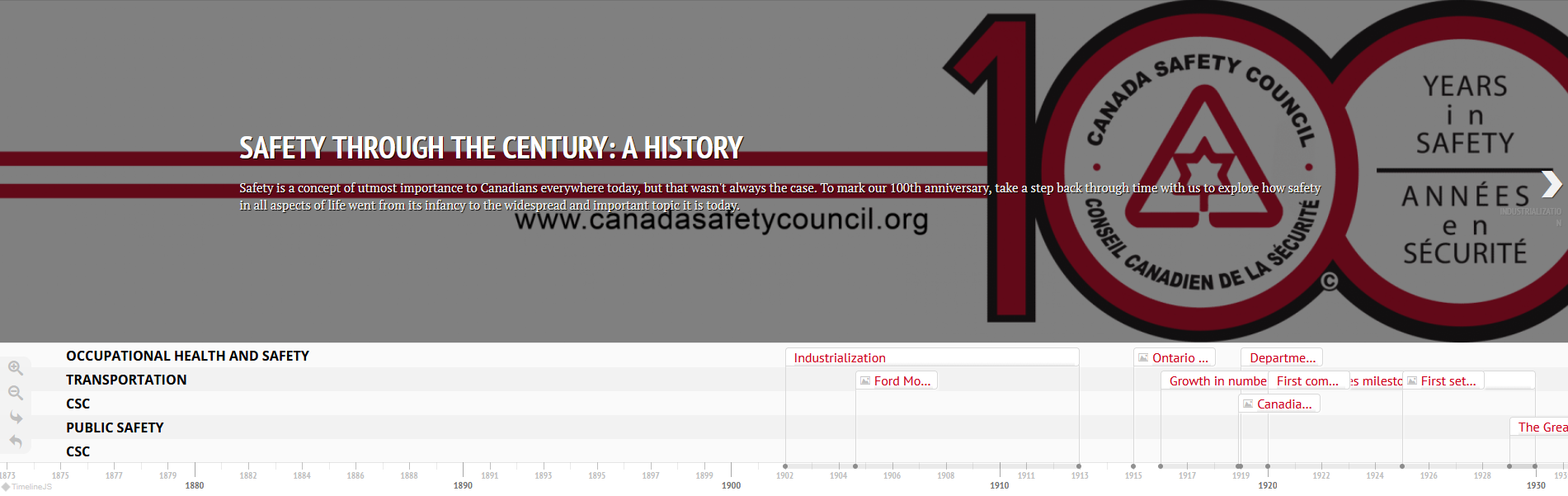
When the Canada Safety Council approached its 100th anniversary, I wanted the new website launch to incorporate an element of interactive storytelling. A century of safety highlights can easily become a meaningless list of dates and milestones that people skim past. My goal was to turn that into something memorable — a guided experience that helped people understand how safety priorities have evolved, and why they still matter.
I chose an interactive timeline because it mirrors how people actually process long histories: in chunks, with context, and at their own pace. Rather than telling users everything at once, the structure invites exploration, allowing them to move forward, pause, or jump back as their curiosity dictates.
Building the timeline meant making deliberate editorial choices. Not every moment made the cut. I focused on entries that marked real shifts — changes in public understanding, policy, or risk — and moments that were important to the organization. I left out material that added volume without insight. The result is a narrative that feels intentional rather than exhaustive, and informative without being overwhelming.
The finished piece acts as both a historical artifact and a digital storytelling tool: one that respects institutional history while making it accessible, readable, and engaging for a modern audience.